What Does Solar Ready Mean? A Licensed Electrician’s Checklist for Solar Ready Homes
Key takeaways
“Solar ready” means your home’s electrical system can safely take solar now, and cope with sensible upgrades later.
The switchboard, safety switches (RCDs), earthing, and available capacity matter just as much as your roof space.
“Battery ready” and “solar ready” overlap, but they are not the same thing.
A pre-install electrical assessment can help reduce delays, compliance issues, and last-minute quote variations.
I’ve lost count of how many times I’ve rocked up to a home where the solar decision was already made. Panels picked. Installer booked. Everyone excited. Then someone opens the meter box, and the mood changes fast.
It’s never because solar is a bad idea. It’s because the house isn’t as “solar ready” as the paperwork assumed. An older switchboard that’s been patched up over the years, safety switches that don’t match what the home actually needs, or a supply that’s already working hard just keeping up with air con, hot water, and the oven at dinner time.
That’s why I’m a big believer in getting clear on what solar-ready actually means before install day. Not the sales version. The practical version that keeps your home safe, compliant, and set up properly for whatever comes next, whether that’s a battery, an EV charger, or just fewer headaches.
Important: This article is general information only. Electrical requirements vary by state, property condition, and system design. Electrical work should be carried out by a licensed electrician.
What does solar ready mean for a home?
When people say solar-ready homes, they usually mean: “Can I get solar installed without drama?”
In practical terms, a solar-ready home is one where the electrical system can safely support the inverter connection, the correct protection devices, and your household demand, without pushing old components past their limits.
If you want a simple way to picture it, think of solar as adding a new “power pathway” into your home. The roof might be perfect, but if the switchboard and supply are outdated, cramped, or already under pressure, the install can turn into a detour.
Solar ready requirements
Solar ready requirements vary by home, but the same fundamentals show up again and again:
- a switchboard with enough space and capacity for safe upgrades
- properly functioning safety switches (RCDs) where required
- sound earthing and bonding
- realistic capacity planning for your household loads
- wiring and connection points that are safe and compliant
If you’re still in research mode and want a reputable overview of how to compare quotes and choose accredited providers, the Clean Energy Council solar guide for consumers is a handy reference.
Why a pre-install electrical check matters before you spend
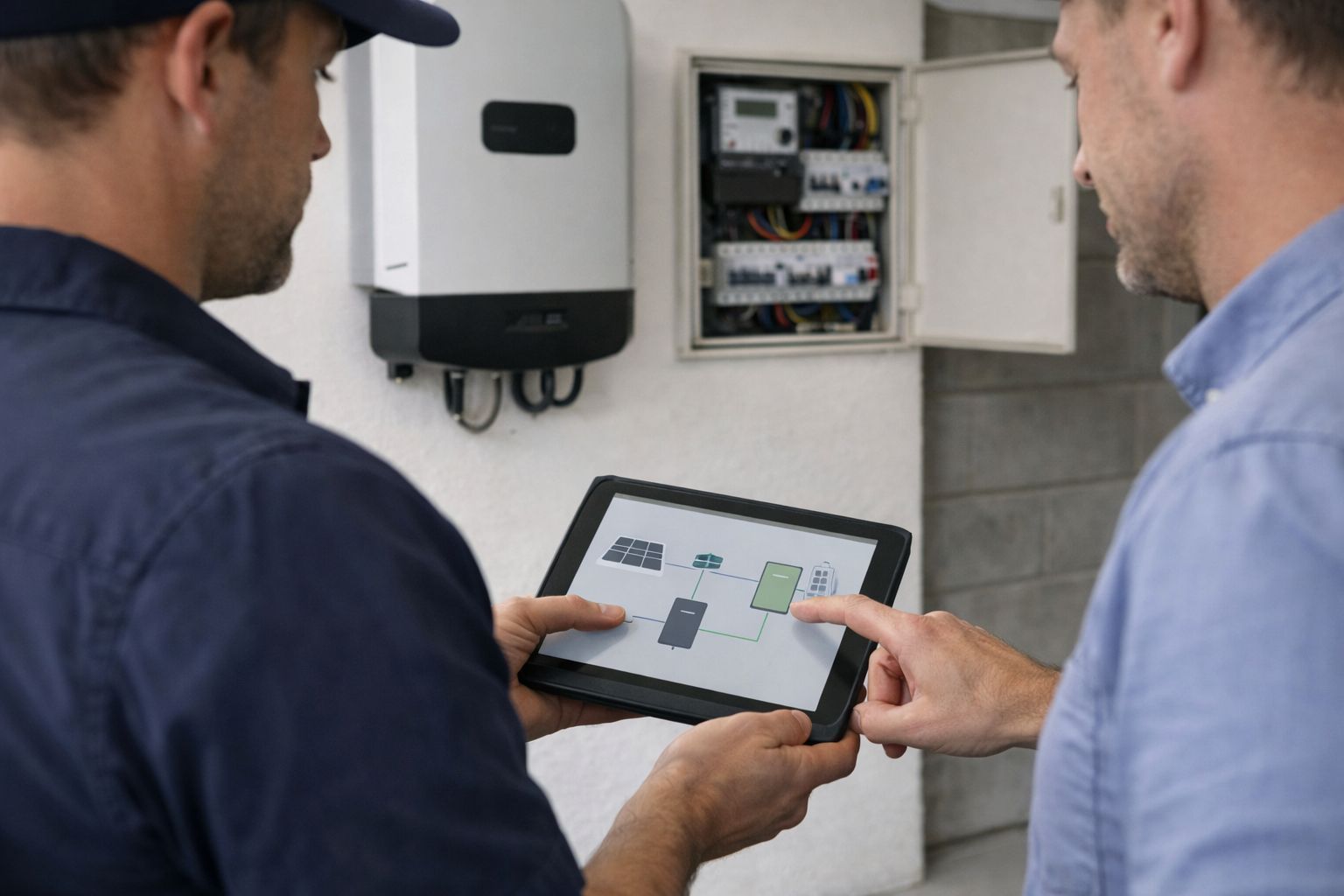
Most people focus on panels, inverters, rebates, and payback. Fair enough. But install day is not the time to discover your switchboard is full, your protection is outdated, or your supply is already stretched.
A pre-install electrical check helps you avoid the classic scenario where the system looks great on paper, then gets delayed because the electrical base needs work first.
It can also help with:
- reducing last-minute variations (those “we didn’t allow for that” costs)
- lowering the chance of nuisance tripping and reliability issues once the system is running
- confirming the installation pathway is safe and compliant
- planning for batteries or EV charging later, without needing to redo work
A clean plan always beats a scramble. Every time.
Solar ready requirements: the 7 checks I do before a solar install
This is not a DIY checklist. It’s what a licensed electrician assesses, so you’re not guessing. Working with experienced providers of solar system installation helps ensure readiness checks are completed properly before the system is connected.
- Switchboard condition and capacity
Is it modern, tidy and upgrade-friendly, or cramped and past its prime? A board that’s already packed tight leaves very little room to add protection devices or new circuits cleanly. - Safety switches (RCDs) and circuit protection
RCDs (often called safety switches) are there to reduce the risk of serious electric shock. If protection is outdated, incorrectly configured, or missing where it should be, that needs to be sorted before adding new generation equipment. - Main supply capacity
Some homes are fine on single-phase. Others are already pushing it with air conditioning, hot water, ovens, pool gear and a home office. We look at what the home is drawing now, and what it’s likely to draw once solar, batteries, or EV charging enters the chat. - Earthing and bonding
If earthing is poor, the whole safety story falls apart. It’s not the exciting part of the job, but it’s one of the first things I want confidence in. - Existing load profile and usage patterns
Not just what you own, but how you use it. “Air con occasionally” is very different to “air con all summer, plus a pool pump, plus two people working from home”. - Cabling condition and heat risk
Older cabling, heat-stressed connections, or patchy additions can become fault points once demand increases. A lot of issues hide in plain sight until things warm up under load. - Mounting space and safe routing
We check the meter box and switchboard area for safe clearances, tidy routing, and realistic placement for components. A clean route and compliant clearances are the difference between a neat install and a stressful one.
If you’re in Sydney or the Northern Beaches and you want someone to check these items properly, this fits naturally under Logic Electrical’s general electrical services, alongside safety inspections, fault finding, rewiring and supply upgrades.
Are solar ready homes automatically battery ready too?
Not always. This is where people get caught out, because “ready” gets used a bit loosely online.
A home can be solar ready for a straightforward PV system, but not battery ready without extra planning, depending on:
- switchboard space and protection requirements
- supply capacity and how loads stack up over time
- where a battery could be located safely
- what you actually want the battery to do (backup power, bill savings, or both)
Where “battery ready solar inverters” fit in
You’ll often see the phrase battery ready solar inverters. In plain English, it usually means the inverter is designed to support a battery now or later, depending on the model and configuration.
But here’s the key point: an inverter being battery ready does not automatically make the house battery ready.
Battery installations in Australia have stricter expectations for a reason. The Clean Energy Regulator outlines the need for appropriately qualified, licensed and accredited work inSolar battery installers and designers.
So if batteries are on your horizon, treat “battery ready” as a whole-home readiness question, not a box tick on an inverter brochure.
Solar, batteries, and EV charging: how loads stack up over time
Solar is often the first step. Then comes the “since we’re doing it…” list:
- add a battery later
- upgrade air con
- get an EV
- set up a proper home office
- renovate the kitchen and suddenly there’s a bigger cooktop
All normal. But each layer changes demand, and demand is where older electrical setups show their age.
Upgrade goal
What “ready” usually involves
Common surprise if it’s not ready
Solar ready
- Switchboard capacity, correct protection, safe connection points
Switchboard work required mid-quote
Battery ready
Additional protection, compliant pathways, suitable location
Extra electrical works or location constraints
EV ready
Dedicated circuit, capacity planning, safe routing
Tripping, overheating, or supply upgrades needed
This is why a proper assessment early can save you from doing the same work twice. No one wants to pay for the “version two” install.
Signs your switchboard or mains supply may need upgrading before solar
If you’re seeing any of these, it’s worth booking a check before you lock in an install date:
- lights flicker when high-load appliances start
- breakers trip regularly (especially in warm weather)
- buzzing from the switchboard
- warm spots or a faint burning smell near the board
- old ceramic fuses or visibly aged components
- a history of “quick fixes” over the years
If you’re reading that list and thinking, “Yeah, that’s us”, don’t panic. It doesn’t mean you can’t get solar. It usually just means the home needs some preparation first, so the solar system can be installed safely and properly.
What to ask your installer so your quote matches reality
You don’t need to talk like an electrician to get a better outcome. You just need the right questions at the right time. Once you’re ready to install be sure to get in touch with the best solar installer on the Northern Beaches Windpower & Solar Australia.
Quick question list (save it to your notes)
- Are the system designer and installer appropriately accredited for this type of work?
- What switchboard work is included in the quote, and what is excluded?
- Will you confirm earthing and protection requirements before installation day?
- If I want batteries later, what should we allow for now?
- What compliance paperwork will I receive once the job is complete?
It’s also worth notifying your insurer once solar or battery systems are installed, as electrical upgrades can affect replacement values and policy conditions. Speaking with a
leading insurance broker can help ensure your policy reflects the updated value of your home and any new systems installed.
These questions don’t slow the process down. They usually speed it up because they flush out assumptions early.
Book a solar readiness assessment in the Northern Beaches
If your goal is a solar install that’s smooth, safe, and doesn’t blow out on the day, your best first move is an electrical readiness check.
Logic Electrical can take care of the electrical checks and upgrade work that help make a home truly solar ready, and for locals wanting to see where we service and how to get in touch, head toElectrician Northern Beaches.
If you’ve got urgent warning signs like burning smells, repeated tripping, or sudden outages, it’s smarter to treat it as time-sensitive and get help quickly. For those situations, Logic also provides24/7 emergency electrical services.
A simple next step
If you’re planning solar now, or batteries later, book a pre-install assessment first. It gives you clarity on what your home can safely support today, what needs updating before installation, and what you can future-proof so you’re not paying twice.
Because the best solar job is the one you don’t have to “fix up” later.
| Upgrade Goal | What “ready” usually involves | Common surprise if it’s not ready |
|---|---|---|
| Solar ready | Switchboard capacity, correct protection, safe connection points | Switchboard work required mid-quote |
| Battery ready | Additional protection, compliant pathways, suitable location | Extra electrical works or location constraints |
| EV ready | Dedicated circuit, capacity planning, safe routing | Tripping, overheating, or supply upgrades needed |
This is why a proper assessment early can save you from doing the same work twice. No one wants to pay for the “version two” install.
Signs your switchboard or mains supply may need upgrading before solar
If you’re seeing any of these, it’s worth booking a check before you lock in an install date:
- lights flicker when high-load appliances start
- breakers trip regularly (especially in warm weather)
- buzzing from the switchboard
- warm spots or a faint burning smell near the board
- old ceramic fuses or visibly aged components
- a history of “quick fixes” over the years
If you’re reading that list and thinking, “Yeah, that’s us”, don’t panic. It doesn’t mean you can’t get solar. It usually just means the home needs some preparation first, so the solar system can be installed safely and properly.
And if your solar plans also involve upgrading hot water systems or other home infrastructure, it’s worth coordinating early with
hot water system plumbers to ensure everything works safely and efficiently together.
What to ask your installer so your quote matches reality
You don’t need to talk like an electrician to get a better outcome. You just need the right questions at the right time. Once you’re ready to install be sure to get in touch with the best solar installer on the Northern Beaches Windpower & Solar Australia.
Quick question list (save it to your notes)
- Are the system designer and installer appropriately accredited for this type of work?
- What switchboard work is included in the quote, and what is excluded?
- Will you confirm earthing and protection requirements before installation day?
- If I want batteries later, what should we allow for now?
- What compliance paperwork will I receive once the job is complete?
These questions don’t slow the process down. They usually speed it up because they flush out assumptions early.
Book a solar readiness assessment in the Northern Beaches
If your goal is a solar install that’s smooth, safe, and doesn’t blow out on the day, your best first move is an electrical readiness check.
Logic Electrical can take care of the electrical checks and upgrade work that help make a home truly solar ready, and for locals wanting to see where we service and how to get in touch, head to
Electrician Northern Beaches.
If you’ve got urgent warning signs like burning smells, repeated tripping, or sudden outages, it’s smarter to treat it as time-sensitive and get help quickly. For those situations, Logic also provides
24/7 emergency electrical services.
A simple next step
If you’re planning solar now, or batteries later, book a pre-install assessment first. It gives you clarity on what your home can safely support today, what needs updating before installation, and what you can future-proof so you’re not paying twice.
Because the best solar job is the one you don’t have to “fix up” later.